
Introduction: Your Entrepreneurial Journey Begins Now
The dream of owning a successful start an online business is more attainable today than ever before, thanks to the power of the internet. If you have a great product or a unique idea, the desire to start an online business is the first step on a rewarding entrepreneurial journey. But where do you begin? start an online business For many aspiring entrepreneurs, the technical side of building a digital storefront can often feel like an insurmountable wall, filled with jargon and complex decisions.
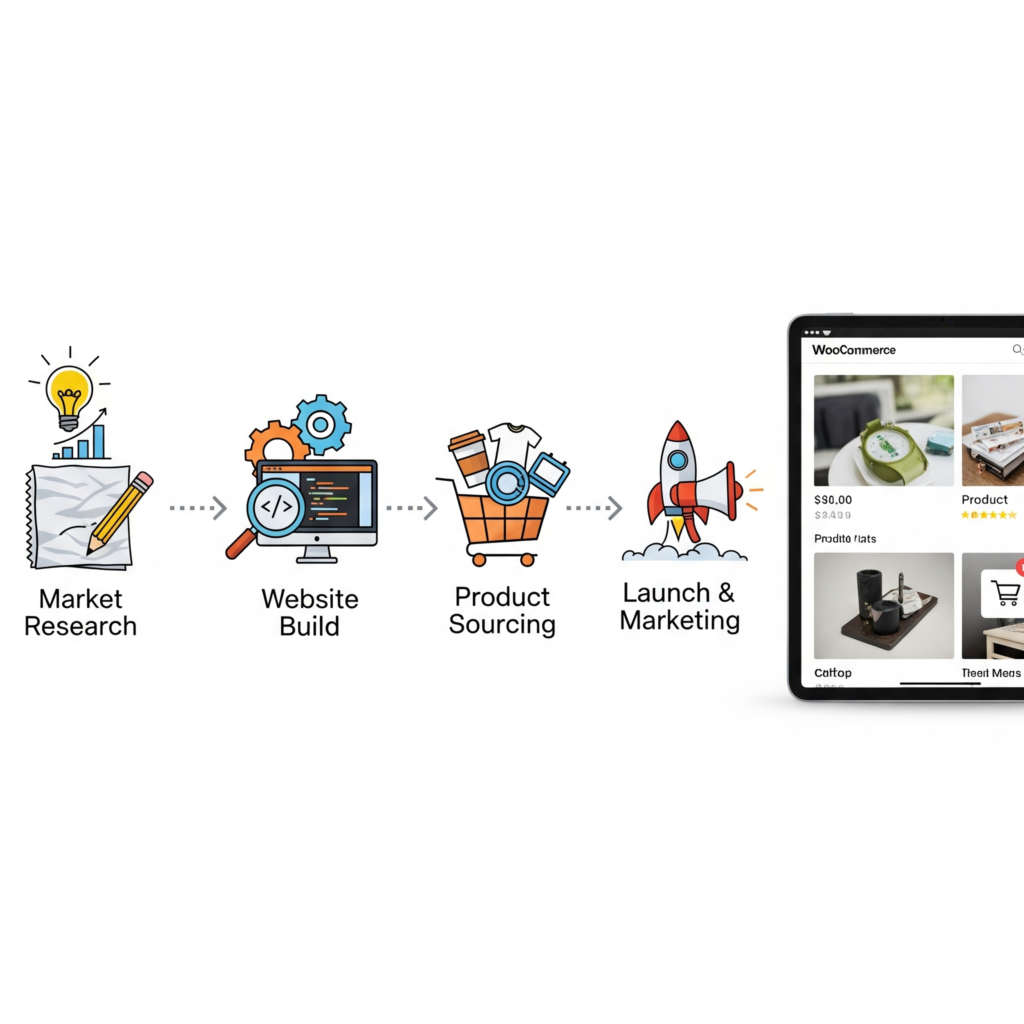
This is where WooCommerce comes in. Powering millions of online stores, WooCommerce is a powerful, flexible, and endlessly scalable platform built on WordPress. start an online business It gives you complete, unparalleled control over every aspect of your e-commerce venture. It allows you to build a professional, feature-rich store that can compete with the biggest names in the industry, all without needing a massive budget or a dedicated team of developers.
This comprehensive guide is your definitive roadmap. We will walk you through every essential step in exhaustive detail, from refining your initial idea and conducting deep market research to launching a fully functional, profitable WooCommerce store and planning your first marketing campaign. Whether you’re a complete beginner or have some experience, this guide will provide the clarity, depth, and strategic insight you need to successfully start an online business.
The Foundation: Nailing Your Niche, Sourcing, and Business Plan
Before you write a single line of code or even think about choosing a domain name, the most critical work happens offline. start an online business A successful store is built on a solid strategic foundation. Rushing this stage is a recipe for failure.
1:Before You Start an Online Business: The Crucial First Steps
Find a Profitable Niche: Your niche is the specific segment of the market you will serve. A common mistake is going too broad. Instead of selling clothes, a better niche would be selling sustainable organic cotton t-shirts for tall men. A focused niche is easier to market to and allows you to become a go-to expert.
How to Find Your Niche:
Analyze Trends: Use tools like Google Trends to see what topics and products are gaining popularity.
Explore Communities: Dive into subreddits on Reddit, Facebook groups,start an online business and online forums related to your interests. What problems are people constantly complaining about? What products do they wish existed?
Balance Passion and Profit: Choose a niche you are genuinely interested in. Your passion will fuel you through the tough times. However, ensure there is a paying market for it.
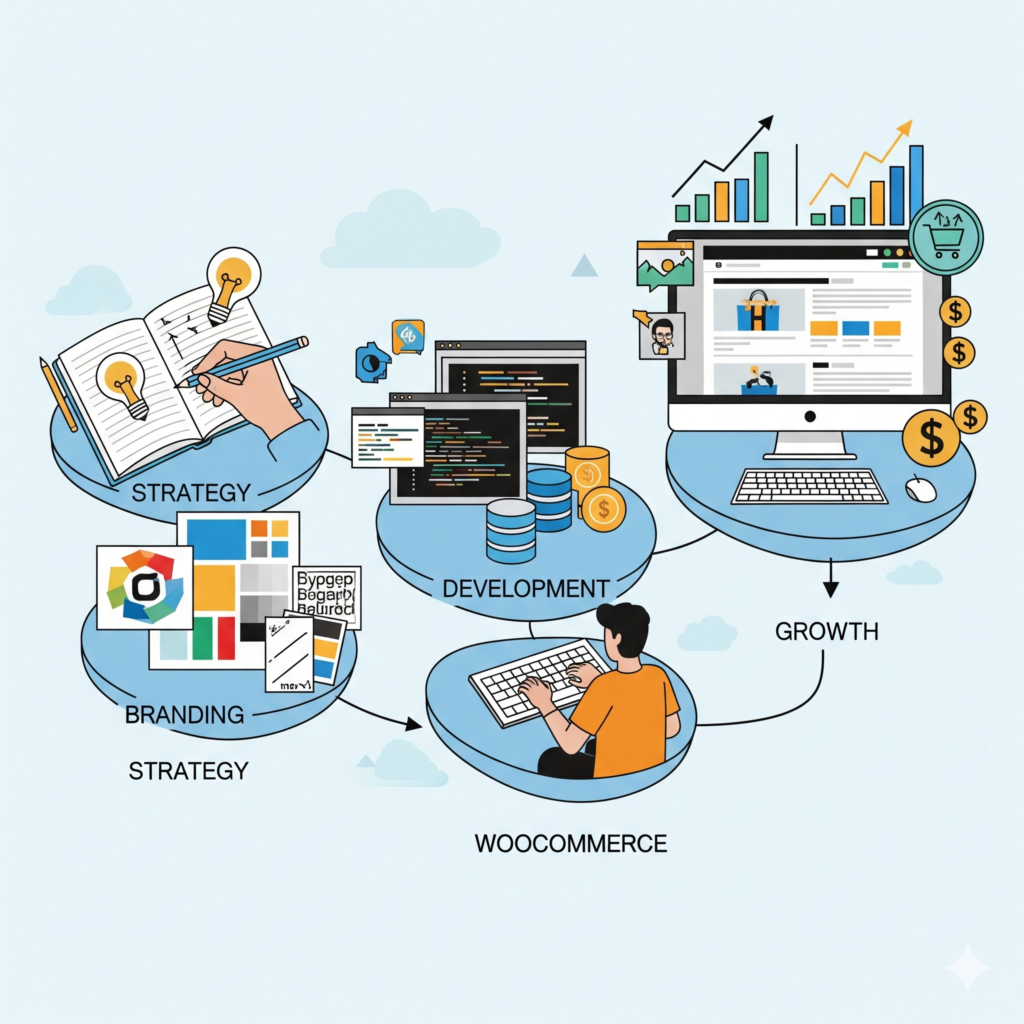
2:Conduct Deep Market Research: Once you have a niche, analyze your potential competitors. Don’t just glance at their homepages.
What to Look For:
Pricing Strategy: start an online business Are they a budget option, a premium brand, or somewhere in between?
Marketing Channels: Where do they find their customers? Are they using Instagram ads, Google Shopping, content marketing, or influencer collaborations?
Customer Reviews: Read their positive and, more importantly, their negative reviews. start an online business Negative reviews are a goldmine of information, revealing customer pain points that your business can solve.
3:Define Your Product Sourcing Model: How will you get your products? This is a critical decision that impacts your budget, risk and scalability.
Manufacturing: You design and create your own unique product. Pros: Full control over brand and quality, highest profit margins. Cons: Very high startup costs, requires manufacturing expertise, high risk if the product doesn’t sell.
Wholesale: You buy products in bulk from a manufacturer or distributor and resell them. Pros: Selling established brands can build trust. Cons: Lower margins, high competition, requires significant investment in inventory.
Dropshipping start an online business/ Print-on-Demand: You partner with a supplier who holds the inventory and ships the product directly to the customer. You only pay for the product after you’ve made a sale. Pros: Extremely low startup cost, no need to manage inventory. Cons: Very low profit margins, no control over shipping times or quality, customer service can be challenging. Platforms like Printful are excellent for starting a print-on-demand business.
Handmade/Artisan: You create the products yourself. Pros: Unique, high-quality products, strong brand story. Cons: Difficult to scale; your production is limited by your own time and effort.
Create a Simple Business Plan: This doesn’t need to be a formal document for a bank. It’s for you. A simple one-page plan should clearly outline your target audience, your product sourcing model, your initial budget (including website costs, inventory, and marketing), and your revenue goals for the first six to twelve months.
The Technical Setup: Domain, Hosting, and WordPress
With a solid plan in place, it’s time to build the technical infrastructure of your store.
Choose a Brandable Domain Name: Your domain name is your online addressstart an online business. A great domain is short, memorable, easy to spell, start an online business and related to your brand. Try to get a .com extension. Avoid using hyphens and numbers if possible. Before you buy, check if the same name is available on major social media platforms.
Select the Right Web Hosting: Hosting is the engine of your website. For an e-commerce store, this is not the place to cut corners.
Shared Hosting: This is the cheapest option, where you share server resources with hundreds of other websites. It’s acceptable for a brand new site with very little traffic, but you will outgrow it quickly.
VPS Hosting (Virtual Private Server): A significant step up, giving you a dedicated slice of server resources. It offers better performance and security than shared hosting.
Managed WordPress/WooCommerce Hosting: This is the premium, hassle-free option. The hosting company specializes in WordPress and handles security,start an online business updates, backups, and performance optimization for you. Providers like Kinsta or WP Engine offer incredible speed and expert support. For anyone serious about their online store, this is a worthwhile investment.
Install WordPress: Most modern web hosts offer a one-click WordPress installation. The process is user-friendly and usually takes less than five minutes.
Bringing start an online business to Life with WooCommerce
Now it’s time to transform your basic WordPress site into a powerful e-commerce machine.
The Heart of Your E-commerce Business
Install and Configure WooCommerce: From your WordPress dashboard, navigate to Plugins Add New and search for “WooCommerce.” Install and activate it. Upon activation, the WooCommerce setup wizard will launch. Take your time with this. It will ask for your store’s address (for tax and shipping calculations) industry, currency, and the types of products you’ll sell.
Choose the Right Theme: Your theme is the visual foundation of your store. A great theme is lightweight, fast, mobile-responsive, and fully compatible with WooCommerce and page builders like Elementor.
Excellent Free Options: Themes like Astra, Kadence, and Storefront (WooCommerce’s official theme) are fantastic starting points. They are incredibly fast and customizable.
Premium Themes: Themes like Flatsome are built specifically for e-commerce and offer more advanced design features and pre-built templates, which can speed up the design process.
Create Essential Pages: WooCommerce automatically creates key pages like Shop, Cart, Checkout, and My Account. You must also create standard business pages to build trust with your customers: About Us, Contact Us, Privacy Policy, and a Shipping & Returns Policy page.
Adding Your Products: The Art of the Product Page
Your products are the stars of the show. Your product pages must be compelling and informative.
Product Types Explained: Go to Products Add New. You can choose from Simple (a standard physical product), Variable (a product with options like size and color), Grouped (a collection of related products), and Virtual/Downloadable (for services or digital goods).
Write Compelling Product Descriptions: Don’t just list specs. Use the “Features tell, benefits sell” principle. A feature is what something is (e.g., “100% cotton”). A benefit is what it does for the customer (e.g., Keeps you cool and comfortable all day long”). Structure your description with a short, engaging opening paragraph, followed by bullet points detailing the key benefits.
Invest in High-Quality Product Photography: Use a consistent, clean background (white is standard). Take photos from multiple angles. Include a start an online business shot showing the product in use. Crucially, optimize your images before uploading them. Use a tool like TinyPNG to compress the file size without losing quality. Large image files are the number one cause of slow e-commerce sites.
Mastering the Product Data Section:General: Set your regular and sale prices.Inventory: Assign a unique SKU (Stock Keeping Unit) to track each product. Enable stock management to automatically track inventory levels.
Shipping: Input the product’s weight and dimensions for accurate shipping calculations.Linked Products: Use “Upsells” to suggest a higher-value alternative (e.g., a premium version of the product) and “Cross-sells” to suggest related items in the cart (e.g., batteries for an electronic toy).
Payments and Shipping: Key Logistics for Your start an online business
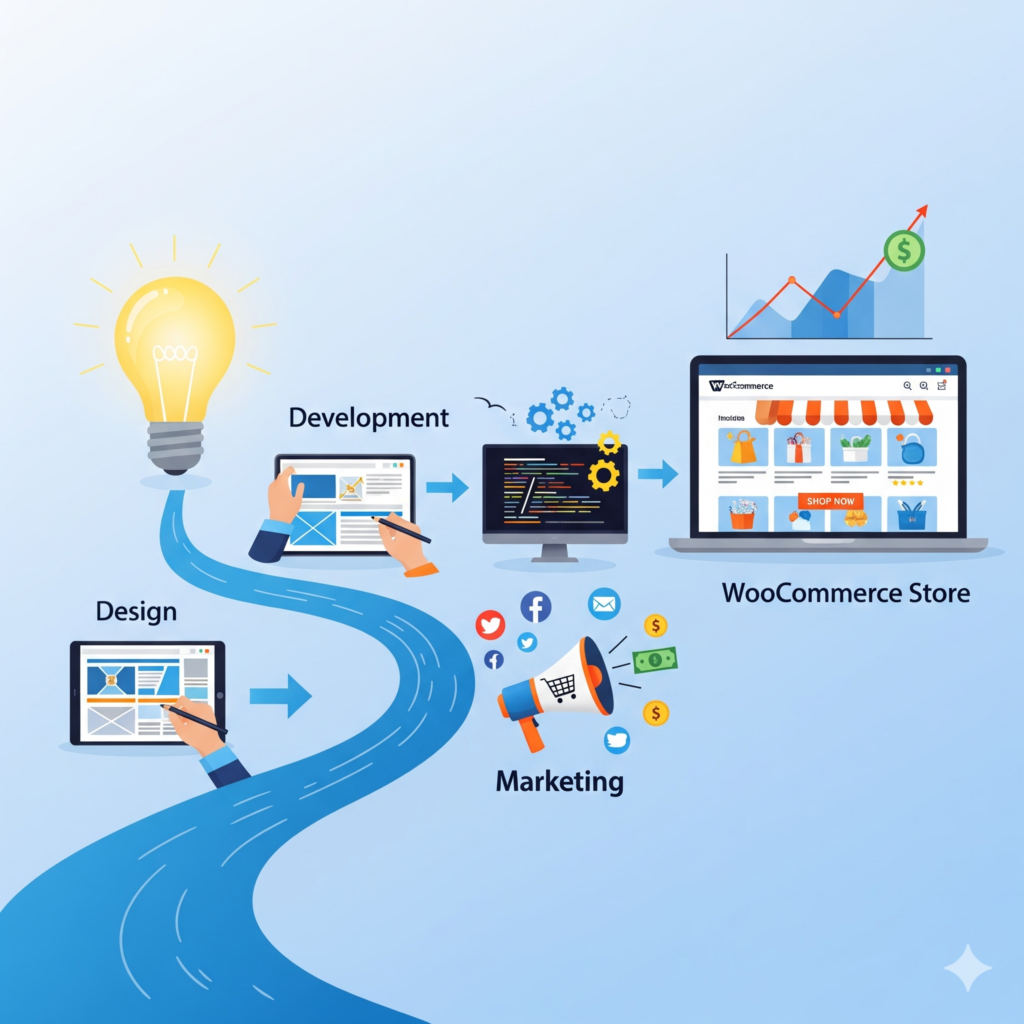
Two of the most critical aspects when you start an online business start an online business are getting paid and delivering your products.
Set Up Payment Gateways: To maximize sales, offer multiple payment options.
Stripe: Allows customers to pay with their credit card directly on your checkout page. This provides a seamless experience and is essential for high conversion rates.
PayPal: A highly trusted payment option. Some customers prefer it for its security and convenience. It typically redirects the user to the PayPal site to complete the purchase.
Buy Now, Pay Later Services like Klarna or Afterpay can increase your average order value by allowing customers to pay in installments.
Configure Shipping In-Depth:
Shipping Zones: These are the geographical areas you ship to. You can create different zones (e.g., Domestic, Europe, Rest of the World”) with different shipping rates.
Shipping Methods: Within each zone, you can offer methods like:
Flat Rate: A fixed charge for shipping, regardless of the order.
Free Shipping: A powerful marketing tool. You can set conditions, such as “Free shipping on orders over $50.”
Local Pickup: For customers who live nearby.
Shipping Classes: These can be used to group products of similar types for shipping purposes. For example, you can create a Bulky class for large furniture items with a higher shipping cost and a Standard class for smaller items.
Essential Plugins and Extensions for Growth
The base WooCommerce platform is powerful, but these plugins will take your store to the next level.
SEO (Rank Math):start an online business Essential for helping your products get found on Google. Rank Math will guide you in optimizing your product pages, categories, and blog posts.Performance (WP Rocket / LiteSpeed Cache): A slow store loses customers. A premium caching plugin like WP Rocket is one of the best investments you can make for your site’s speed.
Email Marketing (Mailchimp for WooCommerce): Start building an email list from day one. Email marketing provides the highest ROI of any digital marketing channel. Use it to announce sales, send newsletters, and recover abandoned carts.
Security (Wordfence): Protect your store and your customer data from malicious attacks with a reliable security plugin.
Analytics (MonsterInsights): This plugin makes it easy to view your Google Analytics data directly in your WordPress dashboard, helping you understand your customers’ behavior.
Customer Service (Tawk.to Live Chat) Offering live chat can significantly increase conversions by allowing you to answer customer questions in real-time.
The Launch Checklist & Post-Launch Marketing Strategy
You’re almost there! Before you announce your store to the world, run through this final checklist, and plan your initial marketing push.
Expanded Pre-Launch Checklist:
Place several test orders using both Stripe and PayPal to ensure the entire process is smooth.
Check your website’s appearance and functionality on multiple web browsers (Chrome, Firefox, Safari) and devices (desktop, tablet, smartphone).
Confirm that automated emails (order confirmation, shipping notification) are being sent and received correctly.
Have a trusted friend or family member navigate the site and provide feedback on their experience.
Ensure your contact forms are working and your social media links are correct.
Post-Launch Marketing Kickstart:
Content Marketing:start an online business Start a blog related to your niche. If you sell coffee beans, write articles about different start an online business brewing methods or the history of coffee. This builds authority and attracts customers through SEO.
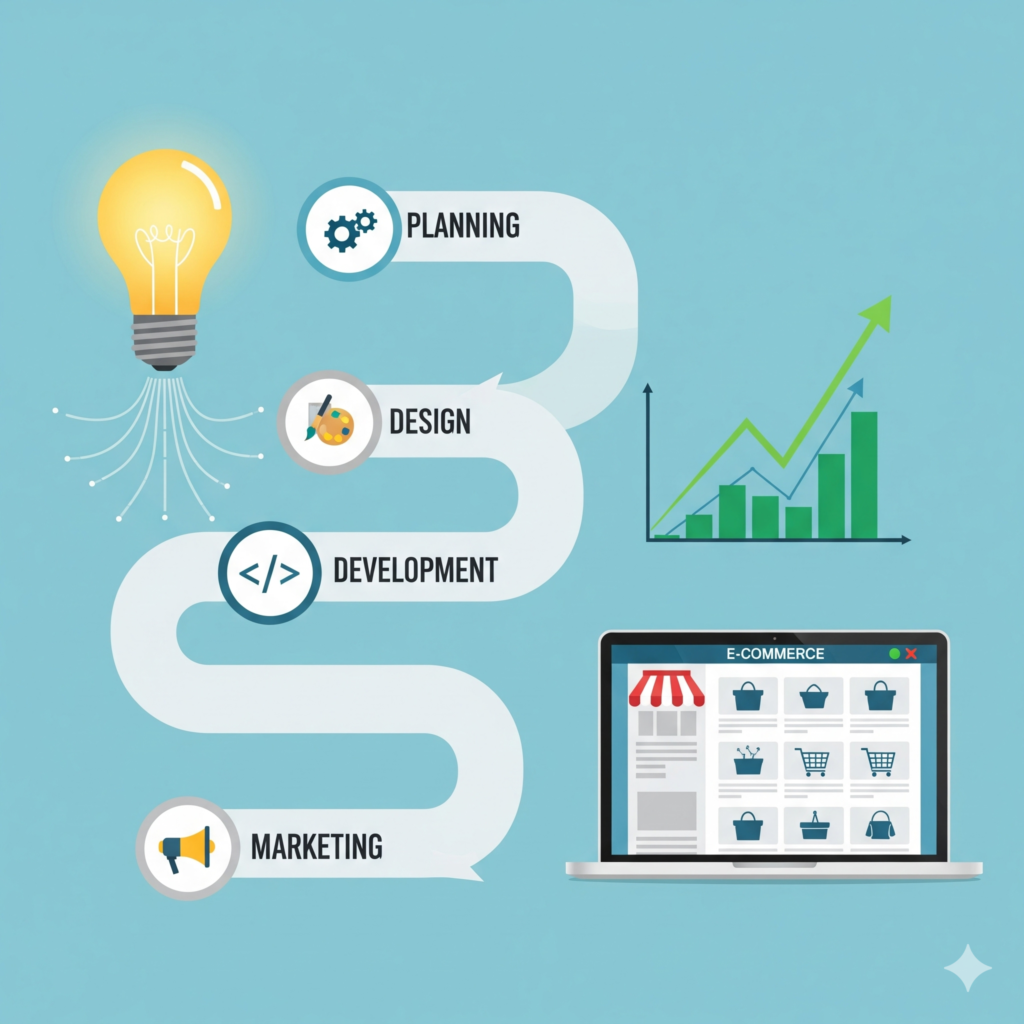
Social Media: You don’t need to be on every platform. Pick one or two where your target audience spends their time (e.g., Instagram or Pinterest for visual products, Facebook for community building).Introductory Offer: Launch with a special promotion, like 15% off for the first week or Free shipping on all launch-day orders to create urgency and drive initial sales.
Post-Launch Marketing – Turning Visitors into Customers
ongratulations, your store is live! But launching your store is like opening a shop in the middle of a desert. Now, you need to build roads to bring people to you. start an online businessThis is where marketing comes in. Here are some fundamental strategies to drive traffic and generate your first sales.
- Content Marketing: Become an Authority
Content marketing is about creating valuable and relevant content to attract your target audience. The best way to do this is by starting a blog on your start an online business.
What to Write: If you sell high-quality coffee beans, write articles like “5 Common Mistakes When Brewing French Press Coffee,” A Guide to Coffee Bean Origins: From Ethiopia to Brazil,” or “How to Choose the Right Coffee Grind Size.”
Why it Works: This strategy positions you as an expert, builds trust, and is incredibly powerful for Search Engine Optimization (SEO). People searching for answers to these questions will find your website, start an online business and many will become customers.
- Email Marketing: Your Most Valuable Asset
From day one, focus on building an email list. Email marketing consistently provides the highest return on investment (ROI) because you own the list and can communicate directly with your audience.
Welcome Series: Set up an automated 3-email series for new subscribers. The first email can offer a small discount (e.g., 10% off their first order), the second can tell your brand story, and the third can showcase your best-selling products.
Abandoned Cart Recovery:start an online business A significant percentage of users add items to their cart but don’t complete the purchase. Use a plugin to send automated emails reminding them about the items in their cart. This single strategy can recover a huge amount of lost revenue.
Promotional Campaigns: Announce sales, new product launches, and special offers to your email subscribers first. This makes them feel like insiders and encourages repeat business.
- Social Media Marketing: Build a Community
You don’t need to be on every social media platform. Choose one or two where your target audience is most active.
Choose Your Platform: For visual products (clothing, jewelry, home decor), Instagram and Pinterest are excellent. For building a community and discussions, a Facebook Group can be very effective.
Content Ideas: Don’t just post product photos. Share behind-the-scenes content of how your products are made, feature customer photos (user-generated content), run polls and contests, and share short video tutorials related to your products. The goal is to engage, not just sell.
- Basic Paid Advertising: Accelerate Your Growth
Once you have some initial sales and understand who your customer is, you can consider paid ads to reach a wider audience.
Meta Ads (Facebook & Instagram): These are powerful for targeting users based on their interests, demographics, and online behavior. You can start with a small daily budget to test different ad creatives and audiences. Google Shopping Ads: These ads display your product image and price directly in Google search results, making them highly effective for capturing buyers with high purchase intent.
Section 9: Building Trust and Legal Compliance
An online store doesn’t just run on products and marketing; it runs on trust. Customers need to feel safe and confident when making a purchase from you. Furthermore, there are legal requirements you must meet.
- Essential Legal Pages:
Your website’s footer should contain links to these three critical pages. Use online generators as a starting point, but consider consulting with a legal professional as your business grows.
Privacy Policy: This is legally required in many parts of the world (like Europe with GDPR). It must clearly state what personal data you collect from visitors (e.g., names, emails, addresses), how you use it, and how you protect it.Terms and Conditionsstart an online business This is the “rulebook” for using your website. It protects your business by limiting liability and defining rules regarding user conduct, intellectual property, etc.
Refund & Return Policy: This is one of the most important pages for building customer trust. Be very clear about your policy. Do you offer refunds? For how many days? Who pays for return shipping? A clear and fair return policy can significantly reduce purchase anxiety and increase conversion rates.
- Build Social Proof:
People trust other people more than they trust businesses. Social proof is evidence that other people have purchased from and are happy with your brand.
Product Reviews: Actively encourage customers to leave reviews. Use a plugin like “WooCommerce Product Reviews Pro” to send automated follow-up emails a week or two after a purchase, asking for a review.Display start an online business Showcase your best reviews and testimonials on your homepage and product pages. Including a photo of the customer (with their permission) makes the testimonial even more powerful.